
Completed March 2025
Metal Roofing in Buttercup Creek, Cedar Park, TX
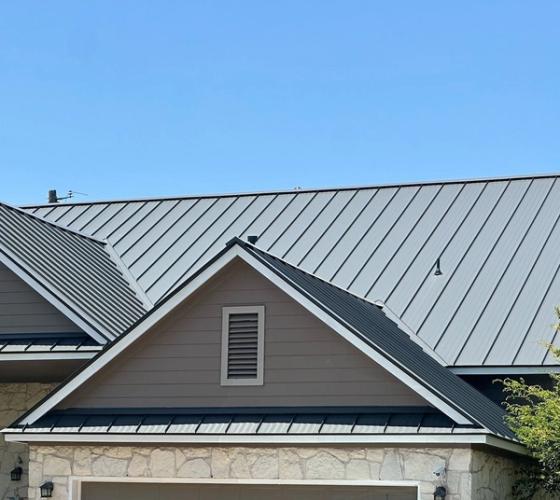
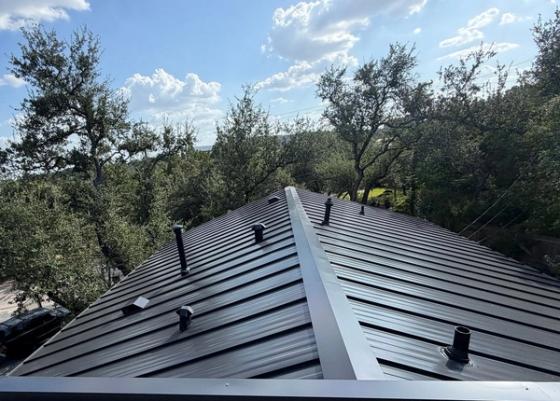
We tore off the old shingles and installed a McElroy Metal standing seam roof on this Cedar Park home, finishing the full system in one focused day on March 11, 2025. The homeowner now has a snap-lock metal roof built to take Central Texas heat and hail without flinching.
- Trades
- Metal Roofing
- Location
- Buttercup Creek, Cedar Park, TX
- Completed
- Brands installed
- McElroy Metal
Standout outcome — A fully color-matched metal roof, including a custom chimney cricket, done in a single day
Timeframe — Approved January 7, 2025; installed and completed March 11, 2025
Job APS-4366
Scope of Work
What We Did
McElroy Metal 1.5" Sure Lock Standing Seam Roof Installation · Custom Color-Matched Chimney Cricket and Flashing System
Metal Roofing
This Cedar Park home got a McElroy Metal Snap Lock standing seam roof, finished in a single day. We chose standing seam because hidden clips let the panels expand and contract in Central Texas heat without loosening fasteners. The 1.5" Sure Lock panels sit over WIP 300 high-temp underlayment for extra protection under 100°-plus summers. A 30"–40" chimney cricket, color-matched flashings, and a vented ridge round out the job for lasting metal roofing in Cedar Park, TX.
Learn more about our metal roofing →Service price ranges are for that work before any discounts. Any total project cost mentioned on this page may include applied discounts.
Wondering where this lands on price? See what metal roofing typically costs in Austin →
How It Went
The Journey
From the first phone call to the final walkthrough — what actually happened on this project.
First contact
January 2, 2025The homeowner reached out through our Facebook and Instagram pages on January 2, 2025. They were ready to move off asphalt shingles and wanted a metal roof built for Central Texas weather.
Evaluation
We started scoping the project the next day, January 3, and inspected the roof. The chimney area stood out, so we planned a 30" to 40" color-matched cricket to solve the drainage problem at its base.
Planning & approval
January 7, 2025The homeowner approved the McElroy Metal standing seam scope on January 7, 2025. Selections covered the 1.5" Sure Lock snap-lock panel, high-temp WIP 300 underlayment, and color-matched trim throughout.
Installation
March 11, 2025The crew handled the full install on March 11, 2025. Material arrived through Republic Metal Supply and ABC Supply Co., and the team dried in the deck, set panels from the eaves up, and flashed every transition.
Completion
March 11, 2025The roof was completed and closed out on March 11, 2025. The homeowner ended up with a fully finished standing seam roof, including the custom chimney cricket and a vented ridge for better attic airflow.
6 Photos
Project Photos
Every photo is this job, shot on site by our crew in Buttercup Creek, Cedar Park, TX.
Want this on your house?
The Full Story
Inside This Project
Why did this Cedar Park home need a metal roof?
The old asphalt shingles had reached the end of their run. Cedar Park sits right in the hail belt, and years of 100-degree summers had baked the granules off the shingle surface.
The homeowner wanted a roof they would not have to think about again. Metal was the clear answer.
- Homeowner found us through Facebook and Instagram in early January
- Homeowner reached out January 2, 2025, and approved the project within five days
- Value range for the full standing seam project: $40k–$50k
What did the crew find during inspection?
A close look at the roof deck told us where the real work would be. The chimney area needed the most attention, so we planned a 30" to 40" chimney cricket to divert water around the base instead of letting it pool.
Water management is where most metal roof failures start. A cricket forces rain and debris to split and run off cleanly, which matters a lot here because cedar pollen and leaf litter love to collect on the uphill side of a chimney. Skip the cricket and you trap moisture against the flashing, which shortens the life of the whole system. We built it into the scope from day one so this roof would drain the way it should for decades.
- Custom chimney cap and cricket, color-matched to the roof
- Counterflashing and headwall flashing at wall transitions
- Pitch change flashing where the roof planes shift angle
What materials went into this roof?
We used the McElroy 1.5" Sure Lock snap-lock panel, secured with concealed 1.5" clips from a 21" coil. The panels snap together over hidden fasteners, so there are no exposed screw heads to leak or back out over time.
Under the panels, we laid WIP 300 high-temp underlayment. This is the detail homeowners often get wrong when they compare quotes. Standard underlayment can break down under a metal roof in Texas heat, because metal panels get much hotter than shingles in direct sun. High-temp underlayment is rated to survive those temperatures, and it is the layer that keeps your deck dry if wind ever drives rain under a panel edge. It costs a little more up front and saves you from a hidden failure you would never see coming.
- Color eave edge, rake edge, ridge cap, and hip cap
- Vented Z ridge vent and Z-bar sized for the 1.5" rib
- Valley metal, Deck Tite pipe boots, rivets, and plastic caps
- Sealed throughout with high-grade caulk at penetrations
How did the installation go?
The whole roof went on in a single day. Our crew ran the tear-off, dried the deck in with underlayment, and set panels working from the eaves up.
- Material delivered through Republic Metal Supply and ABC Supply Co.
- Eave and rake edges set first for a clean starting line
- Panels snapped and clipped course by course, then flashed at all transitions
- Ridge vent installed to let hot attic air escape all summer
What are the results?
This home now has a standing seam roof that should outlast several shingle roofs. It reflects heat, sheds hail, and needs almost no upkeep beyond the occasional rinse.
- No exposed fasteners across the entire field of the roof
- Ridge venting improves attic airflow and eases summer cooling load
- Every trim piece color-matched for a clean, finished look
If you are weighing metal against a new shingle roof, the team at Austin Pro can walk you through both.
Straight Answers
Questions About This Project
How long does a metal roof installation take?
This full standing seam system was installed and completed on March 11, 2025, in one day. Timing depends on roof size and complexity, but most homes finish quickly once material is on site.
Is a metal roof worth it in Cedar Park?
Yes. The snap-lock system holds up to hail and 100-degree summers far better than asphalt, and it resists the moisture buildup from cedar pollen and debris.
Why use a snap-lock system instead of screw-down panels?
The 1.5" Sure Lock panels hide their fasteners under the seam. That removes the exposed screws that loosen and leak over time on cheaper metal roofs.
What does a project like this cost?
This job fell in the $40k–$50k range. Final pricing depends on roof size, pitch, flashing details, and any custom work like the chimney cricket we added here.
Get Your Free Metal Roofing Estimate
Tell us about your project — we'll call you back to schedule a free inspection. No pressure, honest numbers, 4.9 stars across 474 Google reviews.
Prefer to talk now? Call (512) 550-0000 · Mon–Fri 8–8, Sat 8–6, Sun 12–5
Keep Exploring
More Austin Pro Work
 Metal Roofing
 Metal Roofing
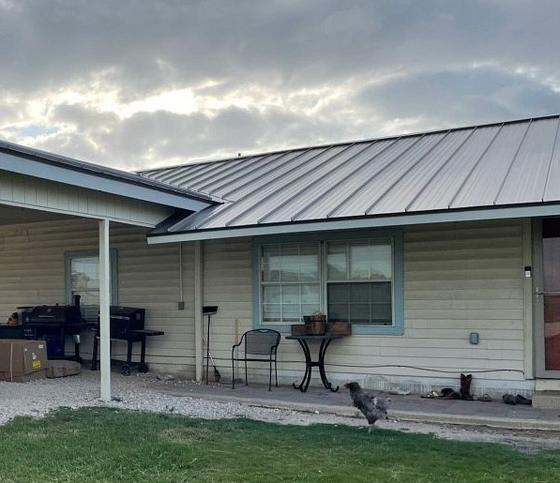 Metal Roofing
Other work near this address
 0.2 mi away
 0.6 mi away
All highlighted Austin Pro projects → · Austin Pro in Cedar Park → · Metal Roofing guides →