
Real Project Pricing
What Exterior Work Actually Costs in Austin
409 individually priced trades across 223 documented projects in 28 Central Texas cities, 2022–2026. Not estimates, not an industry average — what the work invoiced for. A documented sample, not every job we have done since 2009.
223
Documented projects
409
Priced trades
28
Central Texas cities
2009
In business since
Pick Your Trade
8 Cost Guides, Built From Real Invoices
Every guide opens with the median a real project landed on, then shows the whole distribution behind it — what each band actually bought, which brands and cities move the number, and where the outliers came from.
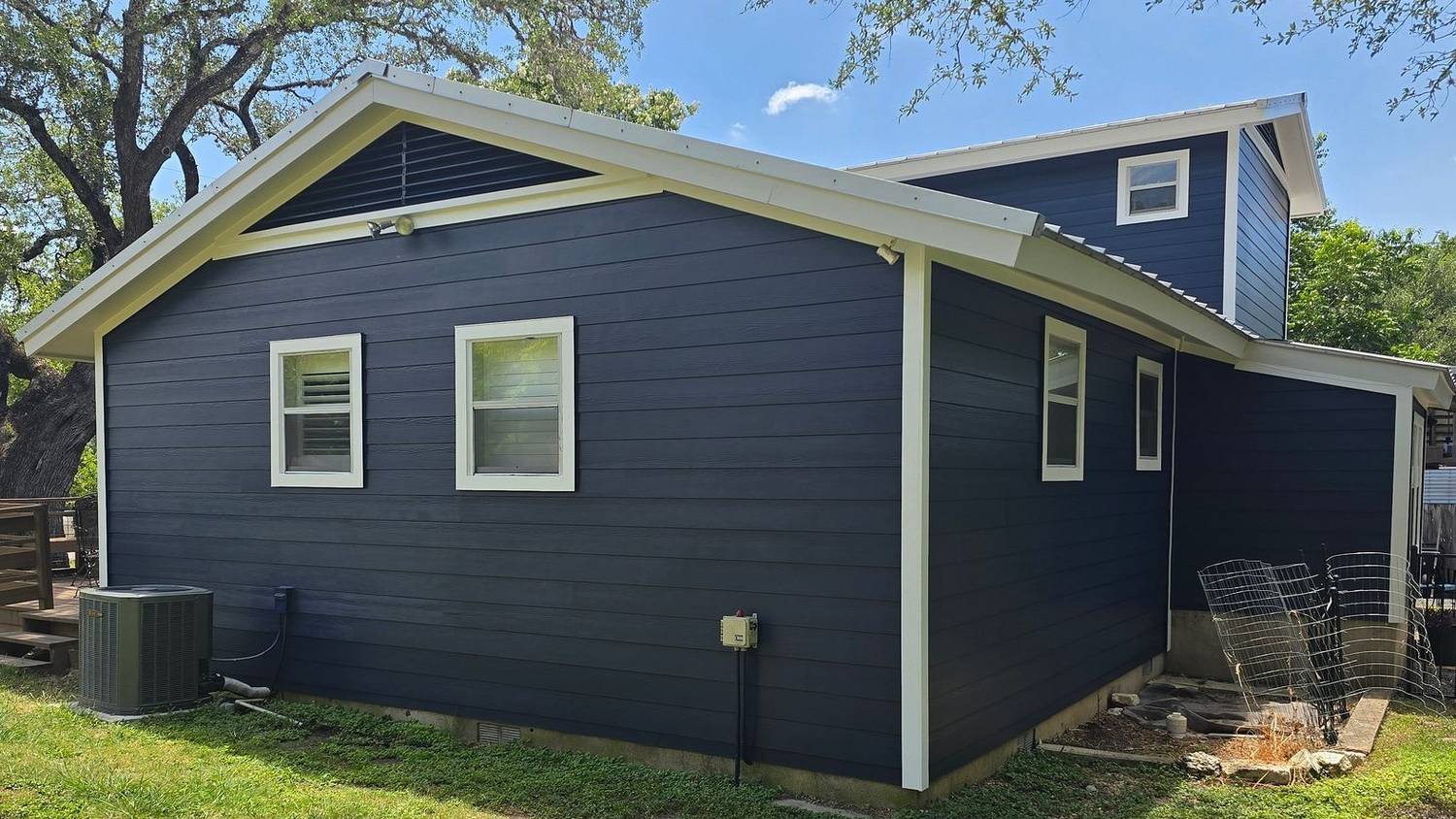
 158 documentedTypical project$15k–$20k
Siding
The biggest exterior line item on most Austin homes, and the one that changes the house the most. Price follows wall square footage, whether you are in James Hardie fiber cement or LP SmartSide, and how much rot turns up once the old boards come off.
- Middle half
- $10k – $25k
- Full range
- Under $2k → $40k–$50k
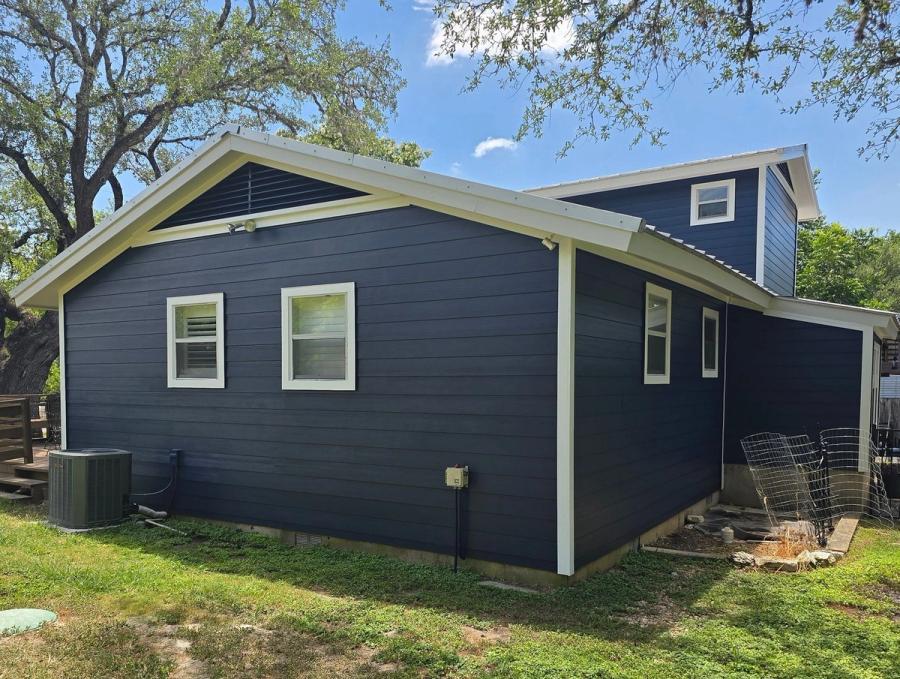
 80 documentedTypical project$10k–$15k
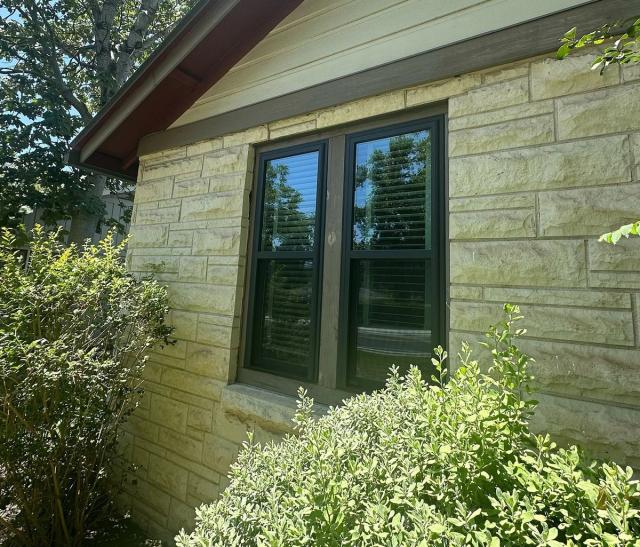
Windows
Priced per opening, so the window count drives the number more than any single upgrade does. Frame material, the glass package, and whether the crew can use inserts or has to go full-frame account for most of the rest.
- Middle half
- $10k – $30k
- Full range
- $2k–$5k → $100k+
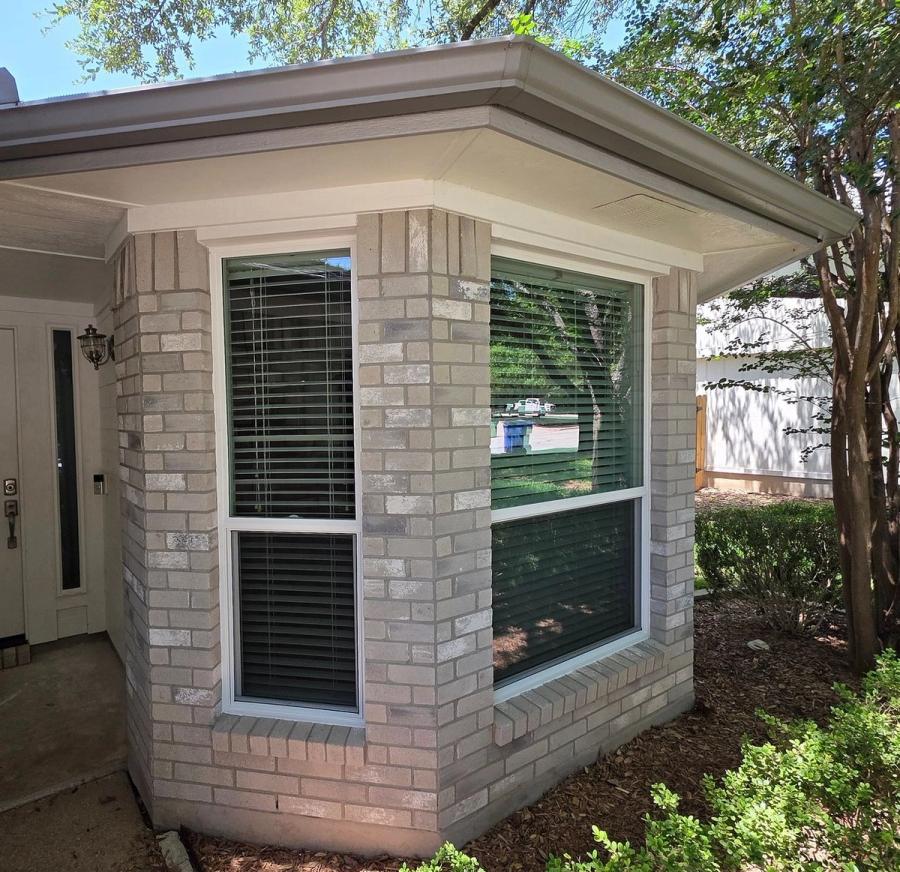
 71 documentedTypical$2k–$5k
Exterior Painting
The cheapest way to reset a home’s exterior, and the trade most often bundled with siding. Prep — scraping, caulking, wood repair — moves the price far more than the paint you choose.
- Middle half
- Under $5k
- Full range
- Under $2k → $10k–$15k
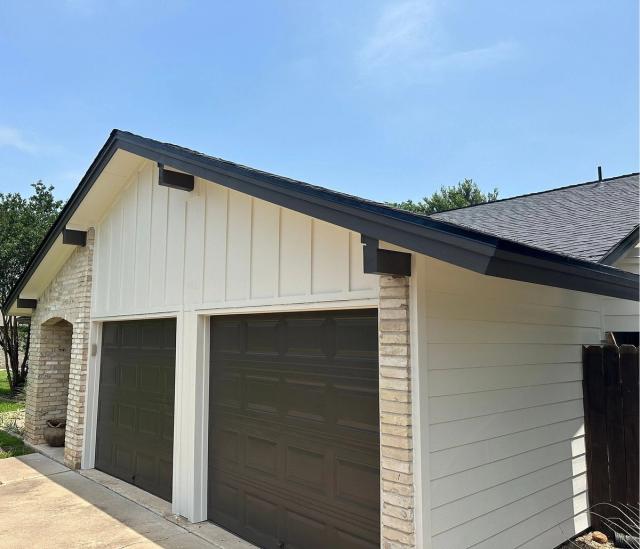 35 documentedTypical$10k–$15k
Shingle Roofing
Roof size, pitch and shingle tier set the baseline; decking that has to be replaced mid tear-off is what pushes a job into the next band. A good share of these were storm-driven.
- Middle half
- $5k – $20k
- Full range
- Under $2k → $100k+
23 documentedTypical$2k–$5kGutters
Measured in linear feet, which makes it the most predictable trade we price. Guards are the main upgrade, and the fascia hiding behind the old run is the usual surprise.
- Middle half
- Under $5k
- Full range
- Under $2k → $5k–$10k
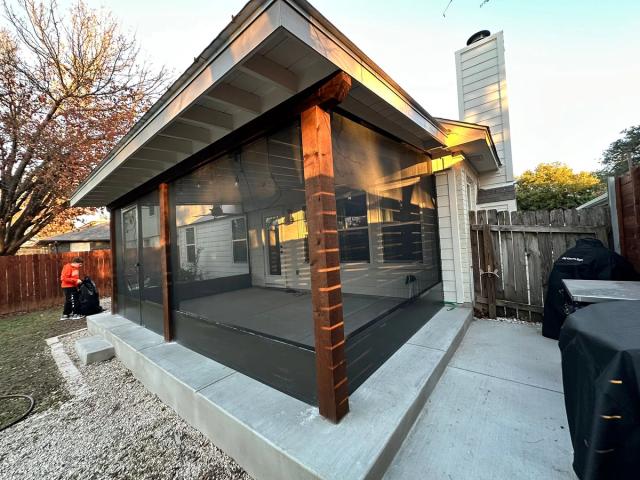 19 documentedTypical$15k–$20k
Patio Covers
The widest spread of anything we build, because a lattice hung off the roofline and an engineered freestanding structure are different projects wearing the same name. Span, footings and electrical do the work.
- Middle half
- $10k – $30k
- Full range
- $5k–$10k → $100k+
 16 documentedTypical$5k–$10k
Doors
One entry door and a full entry-plus-patio package sit in different bands entirely. Slab-only swaps stay low; new jambs, sidelites and iron or glass packages climb quickly.
- Middle half
- $2k – $10k
- Full range
- Under $2k → $15k–$20k
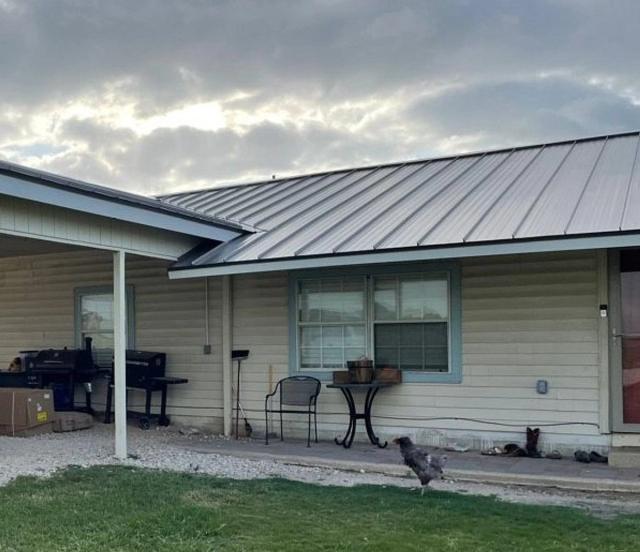 7 documentedTypical$30k–$40k
Metal Roofing
The highest median of any trade we document, and the panel system is the single biggest swing — exposed fastener versus standing seam. Roof complexity does the rest.
- Middle half
- $25k – $50k
- Full range
- $20k–$25k → $100k+
Side By Side
Every Trade on One Price Axis
The same chart the individual guides draw for a single trade, drawn once for all of them. It is the fastest way to sanity-check a bid you already have in hand.
Numbers are one lens — each trade also has a full service page: siding, windows, exterior painting, shingle roofing, gutters, patio covers, door replacement, metal roofing. And every figure above traces back to a documented project you can open →
Bars show where the middle half of projects landed for each trade; the orange line is the median. Outliers at both ends are real and are shown in full inside each guide. Axis tops out at $50k because that is where the widest middle half ends.
Before You Compare Bids
Six Things That Move Every One of These Numbers
Trade by trade the details change, but the same six forces decide which band a project lands in. A bid that ignores them is a bid that changes later.
Home size and stories. Wall area, roof area and linear feet are the base of every number here, and second-story work adds labor before it adds material.
What is found once the old material comes off. Rot, failed sheathing, bad flashing and soft decking are the single most common reason a real invoice lands above its first estimate.
Material tier. Fiber cement versus engineered wood, architectural versus designer shingles, vinyl versus fiberglass frames — the same house prices very differently by line.
Scope at the edges. Trim, soffit, fascia, wraps and transitions are where a "just the walls" job quietly becomes a full envelope.
Access. Steep grade, tight lot lines, mature trees and limited staging all cost crew hours that never show up on a square-foot calculator.
Whether trades are bundled. Sharing one mobilization, one set of scaffolding and one prep pass is usually cheaper than running the same trades a year apart.
What Actually Runs Together
Most of These Projects Were More Than One Trade
64% of these documented projects included two or more priced trades. That is not an upsell statistic — it is what happens when a crew is already on the house and the wall is already open.
70
Exterior Painting + Siding
One mobilization, one round of prep, and the trim gets painted before it goes up.
56
Siding + Windows
Windows go in while the walls are open, so the flashing and trim details are done once.
17
Gutters + Siding
The fascia is already exposed — the cheapest moment to correct it and re-hang.
16
Shingle Roofing + Siding
Full-envelope jobs: one crew sequence from roofline to grade.
Counts are documented projects where both trades carried their own verified price. Bundling is not automatically cheaper on every job — it is cheaper when the trades share prep, staging and access, which the inspection will tell you.
No Asterisks
How These Numbers Are Built
Most contractor pricing pages are a calculator wrapped in adjectives. These are invoices. Here is exactly what that means, including what we leave out.
One trade, one number
Each figure is read off the job worksheet as the price of that single trade. A siding-plus-painting project contributes its siding amount to the siding guide and its painting amount to the painting guide, never the whole invoice to both.
Bands, not point estimates
Prices are published as bands because that is the honest resolution of the data. A median band tells you where projects cluster; the middle-half range tells you how wide the normal spread is without one outlier stretching it.
A sample, not the whole book
This covers the 223 documented projects carrying a verified per-trade price. Jobs whose trade-by-trade split could not be confirmed are excluded outright rather than estimated, so nothing here is a guess dressed as a record.
Materials and labor, before tax
Every band is the finished, materials-and-labor price for that trade on a completed project, excluding sales tax. A cut only appears on a guide when enough projects sit behind it to mean something — thin cuts are hidden, not padded.
Straight Answers
Cost Questions, Answered Plainly
How much does exterior work cost in Austin?
It depends entirely on the trade. Across 409 documented, individually priced trades on 223 Austin Pro projects (2022–2026), medians ran from the $2k–$5k band for exterior painting to the $30k–$40k band for metal roofing. Each trade has its own guide with the full distribution behind that median.
Where do these numbers come from?
From our own completed jobs. Each figure is read off the project worksheet as the price of that one trade, so a job that included siding and painting contributes its actual siding amount to the siding guide and its actual painting amount to the painting guide. Nothing here is calculator output or an industry average.
Is this every project Austin Pro has done?
No, and we would rather say so. These pages cover the 223 documented projects that carry a verified per-trade price. Jobs whose trade-by-trade split could not be confirmed are left out entirely rather than estimated. Treat it as a large, honest sample of our work — not a complete book of business.
Do the figures include materials and labor?
Yes. Every band is the finished materials-and-labor price for that trade on a completed project, excluding sales tax. They are what the work actually invoiced for.
Why is my quote higher than the median on these pages?
Because these bands describe homes, not formulas. A larger or two-story house, hidden damage found during tear-off, harder access, a premium material line, or a wider trim scope will each move a project up a band or two. That is exactly why we inspect before quoting rather than pricing over the phone.
Can I finance the work?
Yes — financing starts at 0% for 24 months and 4.99% for 60 months on approved credit. Exact terms are confirmed in your written proposal, and every cost guide shows the monthly figure for its own median band.
Get Your Own Number, In Writing
Tell us about your project — we'll call you back to schedule a free inspection. No pressure, honest numbers, 4.9 stars across 462 Google reviews.
Prefer to talk now? Call (512) 550-0000 · Mon–Fri 8–5
Your House, Your Number
The Only Figure That Matters Is Yours
These pages exist so you can walk into a quote already knowing the shape of the answer. The rest takes a ladder, an hour, and someone who will write the scope down. The inspection is free and ends with a written proposal.