Menu
< Main Menu
Social Media






After a Texas hailstorm, most homeowners scan the roof and move on—especially if the siding “only” has a few dimples. But here’s the uncomfortable truth: the same storm that has roofing companies booked for weeks can quietly damage your siding and windows in ways that don’t show up until the repair bill has an extra zero.
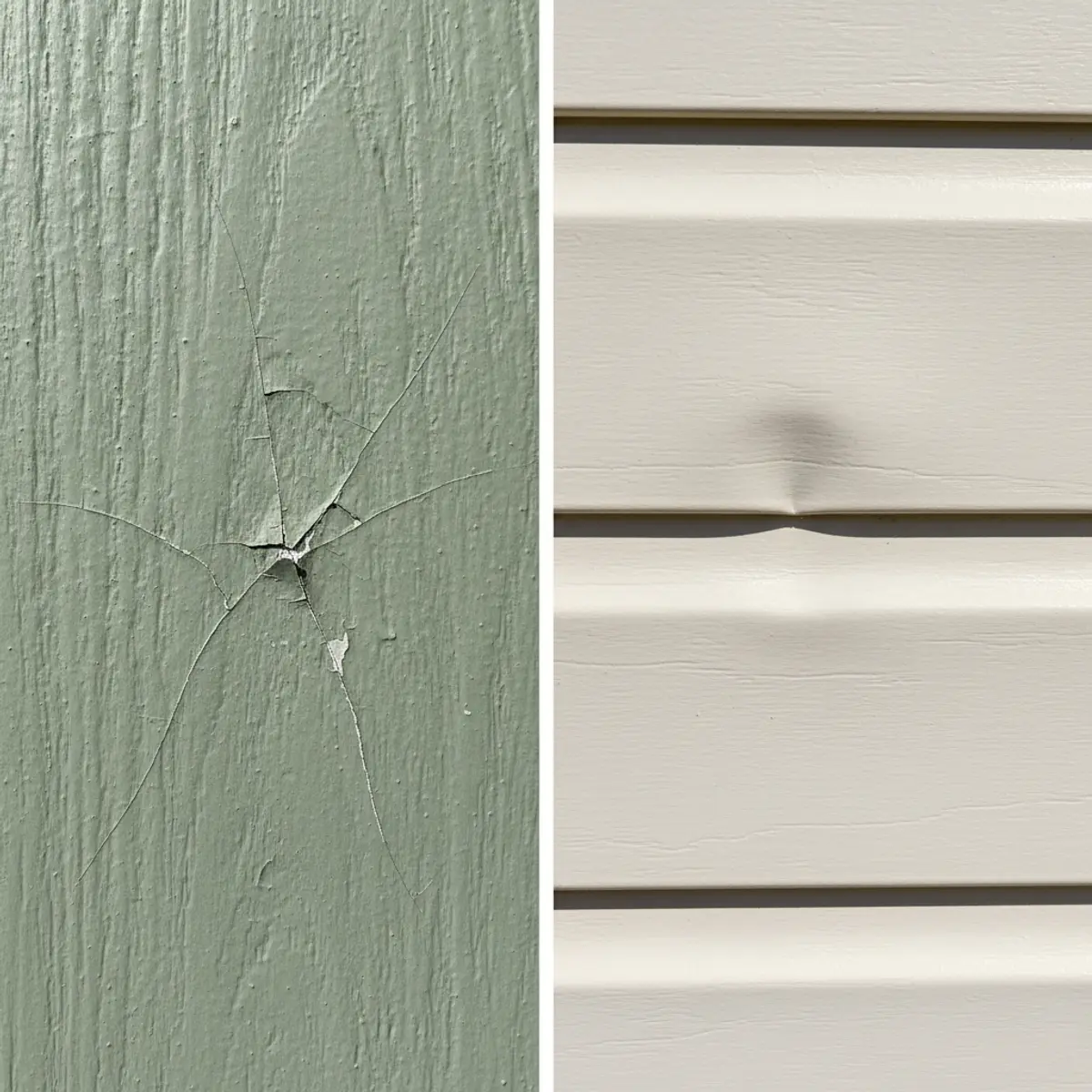
This guide breaks down what hail really does to fiber cement and vinyl siding, why Austin’s humidity turns small cracks into big problems, and how to protect your home (and your insurance claim) with smart, fast documentation. If you’re in Austin, Round Rock, Cedar Park, or nearby, this is the playbook you’ll want before the next storm—and right after the last one.
It’s a familiar scene in Central Texas. A spring storm rolls through. You find a few bruised leaves, maybe a dented gutter. The roof looks “fine” from the driveway, and the siding just has light pock marks. So you file it under cosmetic and get back to life.
Here’s why that instinct is so costly: siding is part of your home’s water-management system. It’s not just a decorative skin. Behind it are layers that control drainage, airflow, and moisture. When hail strikes, it can compromise those layers even if the surface looks intact.
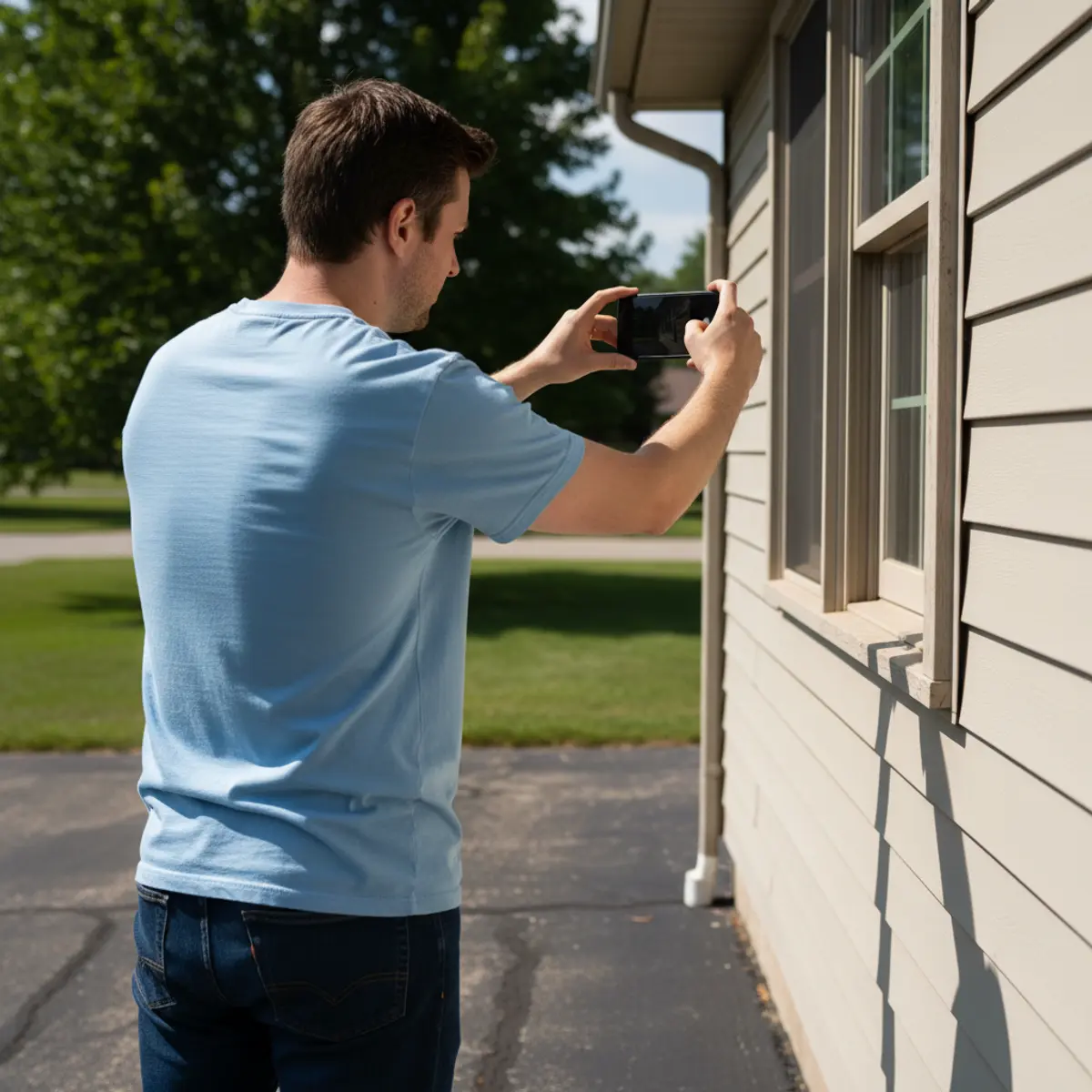
If you’re unsure what “normal wear” versus storm impact looks like, start by understanding what’s typical for your siding type. Austin Pro Siding’s overview of siding services is a helpful baseline for what’s repairable vs. what often requires replacement after impact.
Hail doesn’t need to punch a hole through your wall to create a problem. It just needs to break the system’s reliability—especially at seams, edges, and fastener points.
Fiber cement performs well in heat and sun, which is why it’s popular across Austin. But hail can cause:
The scary part? You may not see these issues until repainting fails early or you notice staining around joints.
Vinyl often shows “dimple dents” that homeowners dismiss because the panel isn’t broken through. But hail can:
In an Austin summer, repeated expansion and contraction can turn “minor” deformation into visible waves, gaps, and water entry points—often long after the storm is out of mind.
Austin isn’t just hot—it’s humid. And humidity changes the stakes. When hail creates micro-openings, moisture doesn’t need a dramatic leak to start causing damage. It just needs time.
Once water gets behind siding, it can:
Most wall systems rely on layers working together: cladding (siding), flashing, housewrap or WRB (water-resistive barrier), and properly sealed penetrations. Hail damage concentrates at the weak points—corners, trim edges, and seams—exactly where water control matters most.
If you suspect storm impact, professional storm damage restoration isn’t about cosmetics—it’s about restoring the building envelope before moisture turns into structural repair.
Hail rarely stops at siding. It also targets window components that most homeowners don’t know to check. Many window companies will tell you: the expensive problems often start with parts that still “look fine.”
Energy loss is the silent tax here. A compromised window seal can increase heat gain in summer and reduce comfort year-round. If you want a deeper dive on modern window performance in Texas heat, see The Best Energy-Efficient Windows for Texas Homes.
Even when coverage applies, storm claims are time-sensitive. Policies and state rules vary, and carriers often require prompt notice plus clear documentation linking damage to a specific event.
If your roof was hit too, it helps to understand what “urgent” looks like. This related guide—Emergency Roof Repairs After a Storm: When To Call a Pro—pairs well with siding and window inspections.
Texas insurance timelines can be strict, and delays can complicate claims. For consumer-friendly guidance on claim handling and storm recovery, review resources from the Texas Department of Insurance. For broader storm safety and preparedness information, the National Weather Service hail safety page is also a solid reference.
Bottom line: the longer you wait, the harder it can be to prove the damage came from that storm—especially once oxidation, sun exposure, or moisture staining enters the picture.
If your siding has dents that seem “purely cosmetic,” treat that as a signal—not a conclusion. The goal is to confirm whether the impact compromised your water barrier, loosened panels, or damaged window components.
Austin Pro Siding helps homeowners across Austin and surrounding communities evaluate storm impact holistically—siding, windows, and the exterior details that protect your home every day. If you want a second set of trained eyes, you can schedule an inspection and get clarity before “minor” damage becomes a major renovation.
To see what local homeowners say about their experience, browse Austin Pro Siding reviews.
See how ColorPlus® technology keeps your siding vibrant and fade-resistant for years.
Thinking of painting your brick? Weigh the pros and cons of this popular trend to decide if it's the right choice for your home's exterior.
Take a look back at how roofing styles in Austin have evolved over the years, from historic materials to modern, energy-efficient innovations.
Shingles, metal, or tile? We help you navigate the vast array of roofing material choices.
Can you paint vinyl siding? We explain the process, the right paints to use, and how to successfully give your home a fresh new color.

Upgrade your lifestyle with our premium exterior products designed for durability and beauty.

Austin Pro crafts exteriors that not only captivate but also promise steadfast protection and reliability, embodying the vibrant spirit of Austin in every facade. Your home's exterior is its silent storyteller and first impression; let us help it speak volumes without uttering a word.