
Completed August 2026
Metal Roofing & Siding in Hillside Vista, Austin, TX
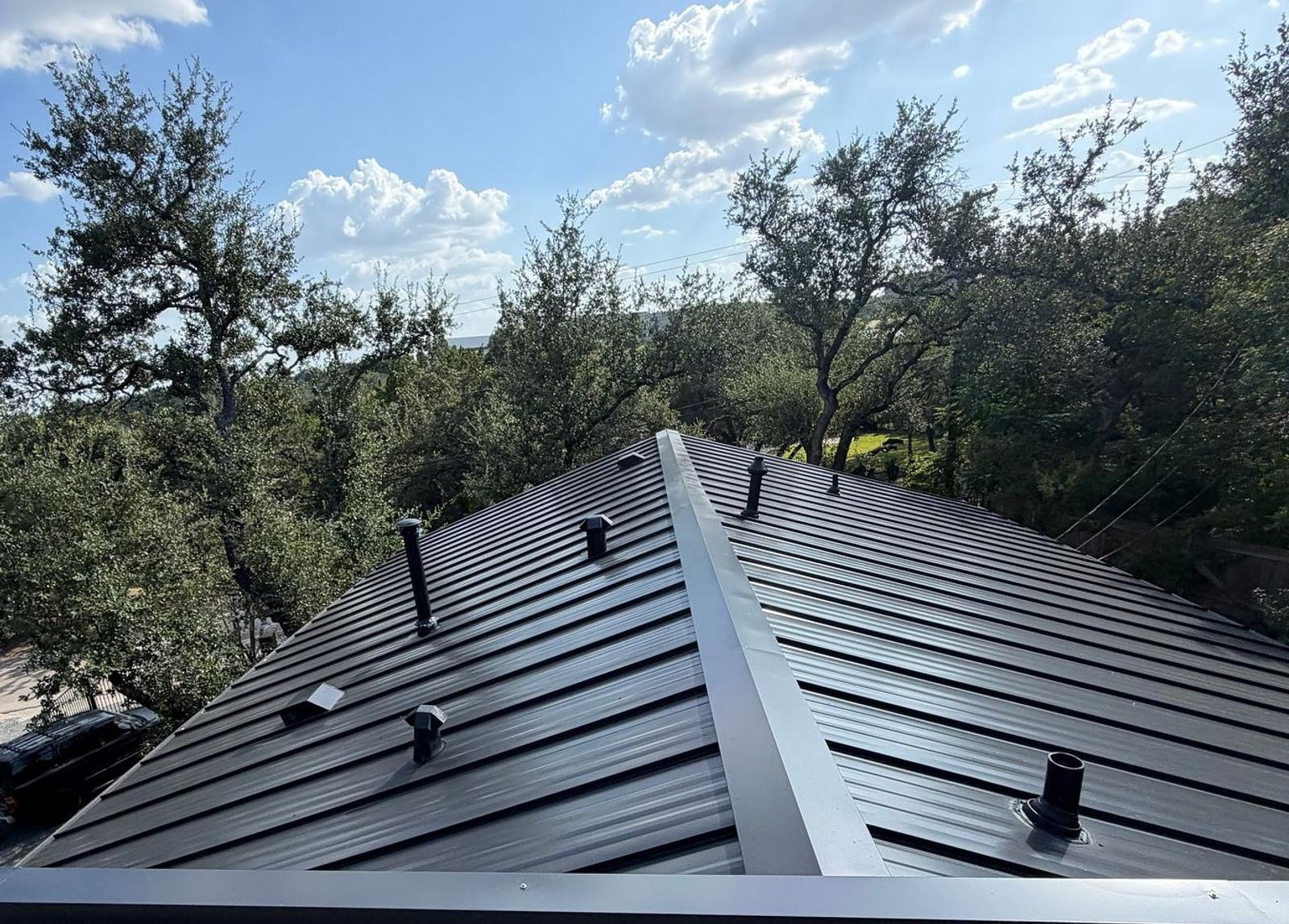
We installed metal roofing and completed siding work on this Austin, TX, home. The finished project pairs a McElroy Metal standing seam roof with repaired, painted roofline details.
- Trades
- Metal Roofing, Siding
- Location
- Hillside Vista, Austin, TX
- Completed
- Project value
- $15k–$20k
- Brands installed
- McElroy Metal, James Hardie
Standout outcome — The new roof was finished alongside the siding where the two systems meet.
Timeframe — On-site installation ran August 21–24, 2026, across four days.
Neighborhood/City — Austin, TX 78746; no subdivision was confirmed in the project record.
Vendor and product — McElroy Metal Snap Lock Standing Seam and James Hardie lap siding.
Job APS-4934
Scope of Work
What We Did
24-Gauge McElroy Metal Snap Lock Standing Seam Roof · James Hardie Roofline Siding and Painted Soffit Repair
Metal Roofing
This Metal Roofing project in Austin, TX, used McElroy Metal 24-gauge Snap Lock standing seam panels. High-temperature underlayment made sense beneath metal roofing during Austin's 100°+ summers. The scope also covered ridge ventilation, flashing, and color-matched edges. Those details completed the roof and its adjoining transitions.
Learn more about our metal roofing →Siding
This Siding project in Austin, TX, included James Hardie 8.25-inch fiber cement lap boards. Their specified seven-inch exposure set a consistent layout at the roofline. Fiber cement was a practical choice beside a roof exposed to Austin heat and weather. Painted soffit and decking repairs finished the adjoining work.
Learn more about our siding →Wondering where this lands on price? See what metal roofing typically costs in Austin →
How It Went
The Journey
From the first phone call to the final walkthrough — what actually happened on this project.
First contact
June 26, 2026The homeowner reached Austin Pro through Yelp on June 26, 2026. The initial request became a prospect on June 27, well before any on-site roofing work began.
Evaluation
The available timeline does not date an inspection or describe a specific defect. The resulting scope addressed the metal roof, modified bitumen replacement, a roof-to-wall junction, and decking/soffit repair. We planned the siding and flashing together because both meet at the roofline.
Planning & approval
August 6, 2026The project was approved on August 6, 2026. The approved scope specified McElroy Metal Snap Lock Standing Seam roofing, James Hardie lap siding, high-temp underlayment, and painted roofline work. No permit date or final color selection appears in the supplied record.
Installation
August 24, 2026On-site work ran from August 21 through August 24, 2026. Over that four-day window, the crew carried out the listed roofing installation, roofline siding work, modified bitumen replacement, and painted decking/soffit repair. The record does not break those tasks into a day-by-day sequence.
Completion
August 24, 2026On-site work finished August 24, 2026, with the metal roof and adjoining roofline work marked complete. Invoicing followed September 3, and the job closed September 21. The supplied record does not document a walkthrough or warranty terms.
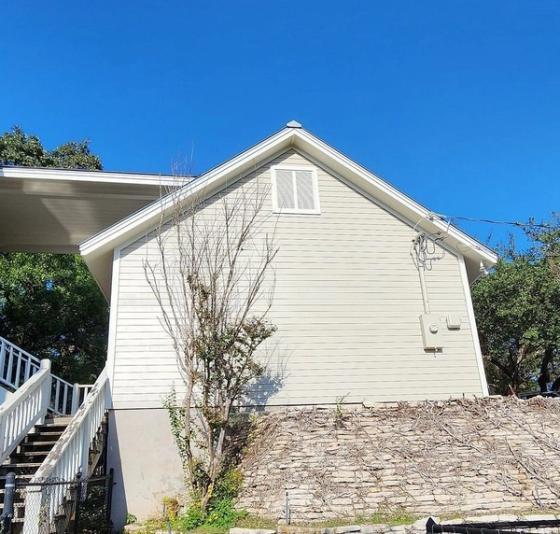
2 Photos
Project Photos
Every photo is this job, shot on site by our crew in Hillside Vista, Austin, TX.
Want this on your house?
The Full Story
Inside This Project
Why did this roofline need more than new metal panels?
The project scope included a roof-to-wall area, decking and soffit repair, and removal and replacement of modified bitumen. That combination made the transitions part of the roofing job, not a separate finish task. A new panel can look complete from the yard while the joints beside a wall still need careful flashing. On an Austin roof exposed to hard rain and hail, those joints deserve the same attention as the open roof field.
Our plan treated each meeting point as its own detail. The roof-to-wall work called for James Hardie siding, while the repair scope covered painted decking and soffit. We did not have a documented cause for the repair, so I would not attribute it to a past storm or a particular leak.
- Headwall flashing was specified for the point where the roof runs into a wall.
- Counterflashing was included to finish a separate wall-side transition.
- A 24-gauge coping cap, sized 2 by 8 by 2 inches, was specified to match the roof color.
- The worksheet also called out a James Hardie “roof meets wall” detail, keeping that junction in the siding scope.
Why choose this standing seam system for an Austin home?
We selected 24-gauge Snap Lock Standing Seam panels with a 1.5-inch seam and a pan measuring about 16.5 inches. The scope pairs that profile with clips rather than treating the panels as the whole roof assembly. That matters because the fastening method, underlayment, and trim must work together. Austin summers regularly top 100°F, so the specified high-temp layer beneath the metal was a purposeful part of this build, not an optional add-on.
The homeowner should not judge a standing seam bid by panel thickness alone. This one also included the smaller pieces that close off edges and the ridge. Their presence in the worksheet let us plan the full assembly before installation began.
- Epilay Ultra high-temp underlayment was specified below the roof panels.
- The 1.5-inch Snap Lock clips were listed alongside screws, rivets, and plastic caps.
- Color-matched eave and rake edges were included for the roof perimeter.
- The ridge package called for a cap and a vented Z shaped for the 1.5-inch rib.
How did the siding work fit around the new roof?
The siding scope focused on the roofline, where the wall finish had to meet the metal roofing details. We used James Hardie 8.25-inch lap fiber cement siding with a specified 7-inch exposure. That measurement matters at a roof-to-wall junction: a different reveal could change where a board ends beside the flashing.
Fiber cement was a practical choice for this exposed part of the home, but it did not replace sound detailing. The worksheet also included caulk and a paint package using Sherwin Williams SuperPaint. We treated those as finishing steps after the roofline and repair work, rather than as substitutes for the metal flashing.
- The James Hardie board selection allowed a Select Cedarmill or Smooth finish; the record does not confirm which was installed.
- Decking and soffit repair included painting as well as labor.
- The specified paint work covered the Hardie roofline package.
- The project listed both siding installation and a separate metal supply delivery charge.
What happened during the on-site installation?
We coordinated the metal roof and adjacent siding as a multi-day installation, not a same-day roof swap. The crew's listed work included roofing labor, modified bitumen replacement, roof-edge components, and painted repair work. Keeping those tasks in one scope helped us address the places where one trade's finish affects the next.
The record does not assign individual tasks to specific days, so I would not claim the panels went on before every repair or that painting happened last. What it does show is a completed on-site window and the materials planned for its key transitions. That is a more useful account than an invented day-by-day schedule.
- The roofing scope included Deck Tite for a roof penetration detail.
- Caulk appeared as a separate material line item, not as the sole weather barrier.
- Installation labor covered the metal roofing work.
- The project was marked completed on August 24, the last day of on-site work.
What was finished after the crew left?
The completed roof combines snap-lock metal panels with edge, ridge, and wall-transition components. Beside it, the fiber cement siding and painted repair areas complete the listed roofline work. That is the result documented for this Austin project; the record does not include a later performance inspection or a storm test.
The administrative milestones continued after installation. They should not be mistaken for extra construction days. For a homeowner comparing project timelines, that distinction separates the time crews spent at the house from the time needed to finish the account.
- The homeowner first contacted Austin Pro through Yelp on June 26, 2026.
- The project advanced to prospect status on June 27 and was approved on August 6.
- Invoicing followed on September 3; the job was closed on September 21.
Straight Answers
Questions About This Project
Did the work take the whole period from first contact to closing?
No. The August 21–24 dates describe the on-site work. The June lead and September closing dates track earlier planning and later administration, not continuous installation.
What does the listed project value cover?
The $15,000–$20,000 band is listed for the primary metal roofing service. The record does not provide a separate siding price or an exact final amount, so it should not be read as an itemized total.
Does the project record identify a warranty or permit?
No warranty term or permit appears in the supplied APS-4934 scope. A homeowner should check the signed project documents for those terms rather than assume they are included.
Will a standing seam roof need attention after cedar pollen season?
Cedar pollen is common in Austin, and the scope does not set a maintenance schedule for this roof. If you arrange a future roof check, ask the inspector to look at the listed ridge vent and wall flashing as well as the panels.
Get Your Free Metal Roofing Estimate
Tell us about your project — we'll call you back to schedule a free inspection. No pressure, honest numbers, 4.9 stars across 474 Google reviews.
Prefer to talk now? Call (512) 550-0000 · Mon–Fri 8–5
Keep Exploring
More Austin Pro Work
 Metal Roofing
 Metal Roofing
 Metal Roofing
Other work near this address
 1.0 mi away
 1.2 mi away
All highlighted Austin Pro projects → · Metal Roofing guides →