
Completed October 2024
Siding in North Austin, Austin, TX (October 2024)
Plus Patio Covers, Exterior Painting, Gutters on the same job
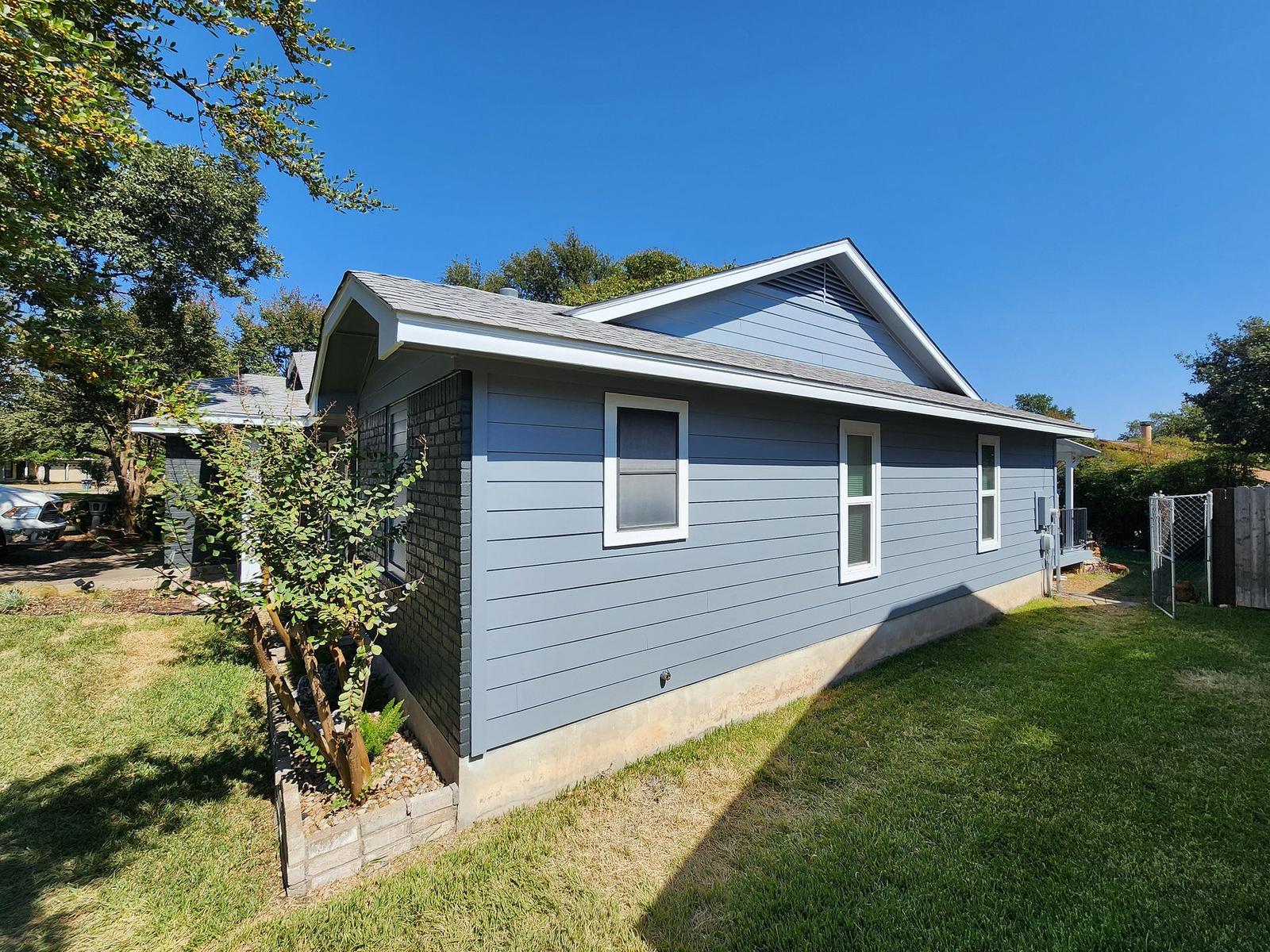
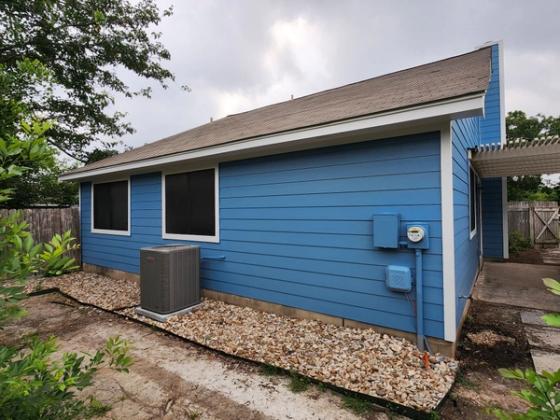
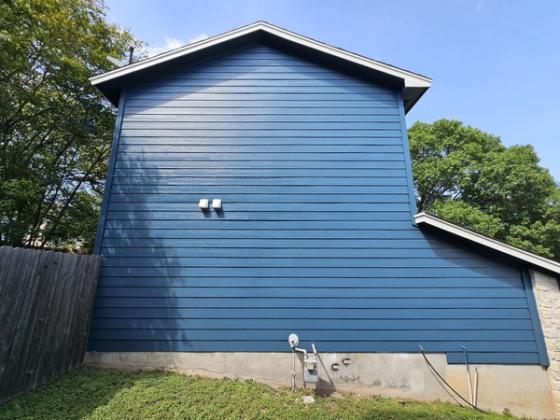
We re-sided a North Austin home in Austin, TX with James Hardie fiber cement, then finished the project with a new patio cover. The home traded worn original cladding for a durable, freshly painted exterior built for Texas summers.
- Trades
- Siding, Patio Covers, Exterior Painting, Gutters
- Location
- North Austin, Austin, TX
- Completed
- Brands installed
- James Hardie, Renaissance Patio, Sherwin Williams
Standout outcome — A hail- and heat-ready shell with a matching patio cover, no new slab needed
Timeframe — Siding in early October, patio cover over two days after
Job APS-4203
Drag to Compare
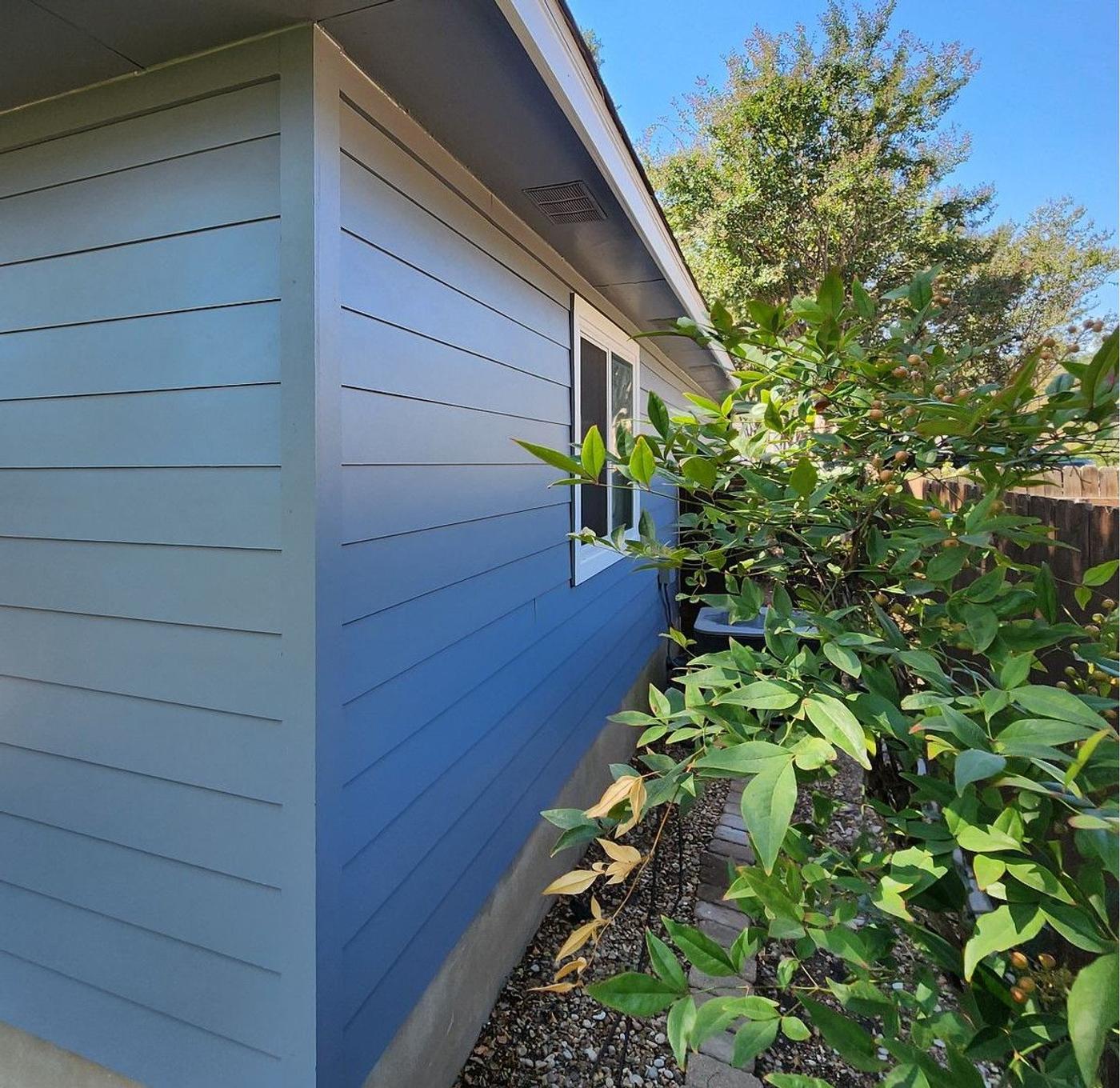
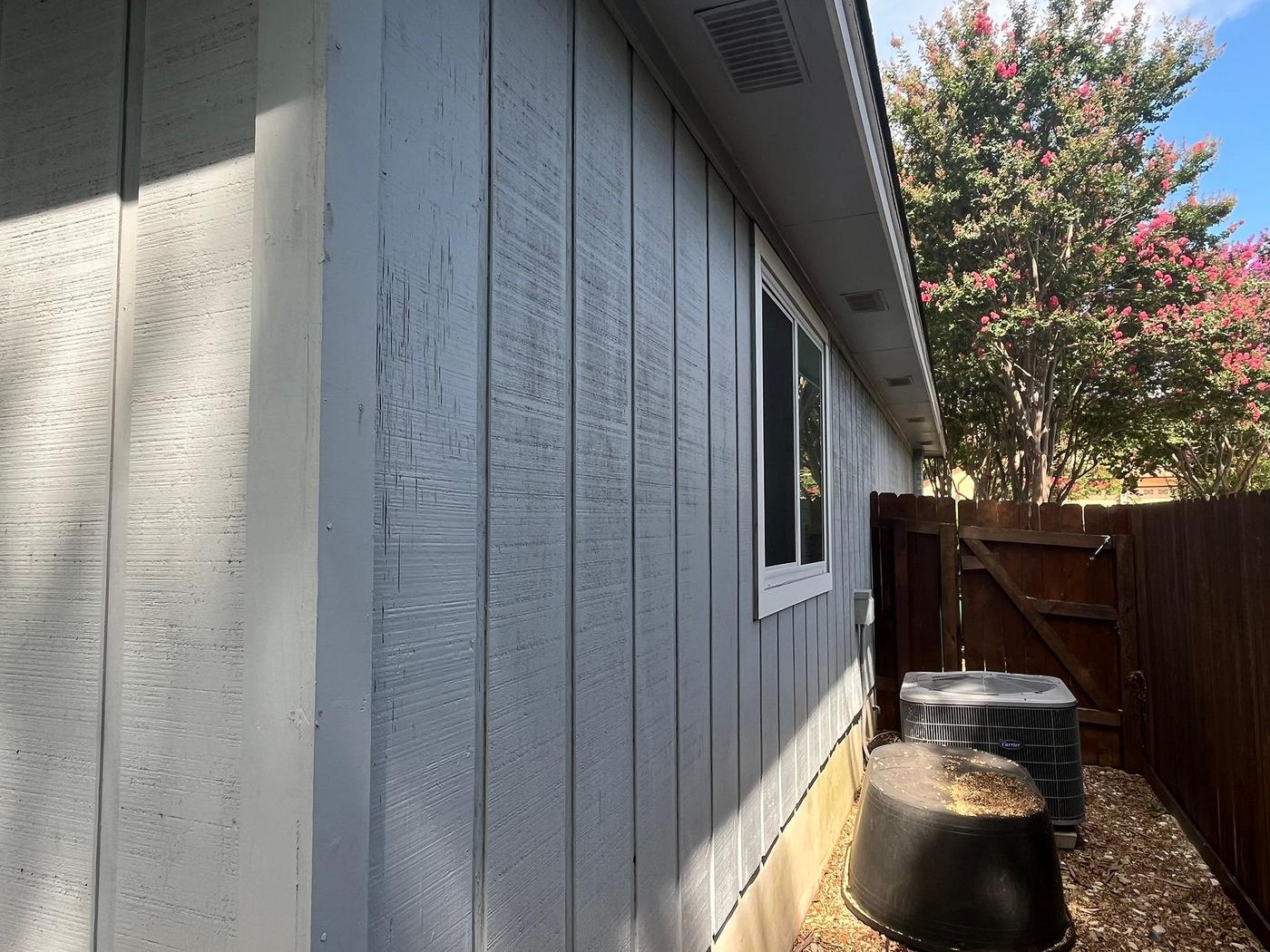
Before & After
Scope of Work
What We Did
James Hardie Smooth Plank Fiber Cement Siding in Two Widths · Patio Cover Built on Existing Slab with 40 Feet of Gutter Screens
Siding
For this siding project in Austin, TX, we installed James Hardie Smooth Plank in 5.25" and 8.25" widths. Fiber cement holds up to our 100-degree summers and hail far better than old wood. The crew wrapped the garage door jambs and added soffit vents for better airflow. We finished with Sherwin Williams SuperPaint on the siding, fascia, soffit, garage doors, and brick.
Learn more about our siding replacement →Patio Covers
This patio cover project in Austin, TX used a Renaissance Patio aluminum system. We built it over two days once the siding was complete. Because the old slab held up fine, we skipped pouring new concrete. Aluminum resists our brutal summer heat and never rots, making it a low-maintenance choice for Central Texas backyards.
Learn more about our patio covers →Exterior Painting
Gutters
This gutter work in Austin, TX focused on protecting the new patio cover from debris. We fitted custom gutter screens across a 40-foot run. The screens block leaves and cedar pollen that otherwise pack our gutters solid. That keeps water flowing during the sudden downpours we get here.
Service price ranges are for that work before any discounts. Any total project cost mentioned on this page may include applied discounts.
Wondering where this lands on price? See what siding typically costs in Austin →
How It Went
The Journey
From the first phone call to the final walkthrough — what actually happened on this project.
First contact
The homeowner found Austin Pro through an internet search and reached out in late June 2024. Their request came in on June 24, and we connected quickly to talk through siding and a possible patio cover for the North Austin home.
Evaluation
By June 28, we were scoping the project. We inspected the aging original cladding, checked the fascia and soffit condition, and confirmed the existing patio slab was solid enough to build on without a new pour.
Planning & approval
July 19, 2024We put together the scope in both James Hardie plank widths, full painting in Sherwin Williams SuperPaint, and the patio cover. The homeowner approved the plan on July 19, 2024, and we scheduled the work for the fall.
Installation
The siding crew installed the fiber cement over several days in early October, wrapping both garage door jambs and adding soffit vents. Painting followed across siding, fascia, soffit, garage doors, and brick. The patio cover then went up over two days once the walls were finished.
Completion
October 15, 2024We completed the project on October 15, 2024, after two rounds of yard cleanup and punch-out. The final walkthrough confirmed clean lines, matched paint, and a patio cover with 40 feet of gutter screens ready for cedar pollen season.
6 Photos
Project Photos
Every photo is this job, shot on site by our crew in North Austin, Austin, TX.
Want this on your house?
The Full Story
Inside This Project
Why did this North Austin home need new siding?
The original cladding had reached the end of its run. Central Texas is hard on exteriors, and this house showed it after years of sun and storms.
- Built during the wave of 1980s–2000s North Austin homes
- Old siding faded and worn from 100-degree summers
- Prone to the kind of damage hail leaves behind
- Ready for a low-upkeep material that holds paint longer
What did we choose, and why fiber cement?
We went with James Hardie Smooth Plank because fiber cement simply outlasts wood and older composite siding in this climate. Wood swells, cracks, and invites rot when Austin's humidity swings against our dry heat. Fiber cement stays dimensionally stable through 100-degree afternoons and shrugs off hail that would dent softer materials. We ran two plank widths, a 5.25-inch and an 8.25-inch profile, to keep the home's proportions looking right rather than flat. The smooth finish also takes paint cleanly, which matters when you want a coat that lasts.
- 8.25-inch Prime Smooth for the broader wall runs
- 5.25-inch Primed Smooth for tighter detail areas
- Wrapped both garage door jambs, including a double
- Added soffit vents to help the attic breathe
How did the siding installation go?
We worked the install over several days in early October. Fiber cement is heavier and cuts differently than wood, so pacing and clean layout matter.
- Materials delivered through ABC Supply and Lansing Building Products
- Fascia and soffit painted up to 24 inches
- Two rounds of yard cleanup and punch-out items
- Every scrap hauled so the yard came back clean
What about the paint work?
Once the siding was up, we moved to paint. A good coat is what turns new fiber cement into a finished, weather-ready exterior.
We used Sherwin Williams SuperPaint across the project. It holds color against UV and stands up to our long cooling season.
- Siding, fascia, and soffit finished in SuperPaint
- Garage doors painted to match the new palette
- Existing brick sealed and coated: primer plus two color coats
- Uniform color tying the whole facade together
How did the patio cover come together?
The patio cover went up over two days once the siding wrapped. We inspected the existing slab first and found it solid, level, and well within tolerance for a new cover. That let us skip a fresh concrete pour, which saved the homeowner both time and cost. Many homeowners assume every patio cover needs new footings or a slab, but a sound existing pad often carries a properly engineered cover just fine. We framed off the slab, tied the cover to the freshly clad wall, and added 40 feet of gutter screens so water and cedar pollen keep moving instead of clogging.
- Built over the existing slab, no new pour
- 40 feet of gutter screens for pollen and leaf debris
- Sequenced after siding to protect the new walls
Straight Answers
Questions About This Project
How long did the whole project take from approval to finish?
The homeowner approved the job on July 19, 2024, and we completed it on October 15, 2024. Siding ran first in early October, with paint and the patio cover following right after.
Why is James Hardie a good fit for Austin homes?
Fiber cement resists the heat, hail, and moisture swings that wear down wood and vinyl here. It also holds paint longer, so you repaint less often under our brutal sun.
What did a project like this cost?
This was a retail job in the $30k–$40k range. That covered full re-siding in two plank widths, complete exterior painting, and the patio cover.
Did the patio cover really not need new concrete?
Correct. The existing slab was sound and level, so we framed the cover directly off it and avoided a new pour entirely.
Get Your Free Siding Estimate
Tell us about your project — we'll call you back to schedule a free inspection. No pressure, honest numbers, 4.9 stars across 474 Google reviews.
Prefer to talk now? Call (512) 550-0000 · Mon–Fri 8–8, Sat 8–6, Sun 12–5
Keep Exploring
More Austin Pro Work
 Siding
 Siding
 Siding
Other work near this address
 0.2 mi away
 0.5 mi away
All highlighted Austin Pro projects → · Austin Pro in North Austin → · Siding guides →